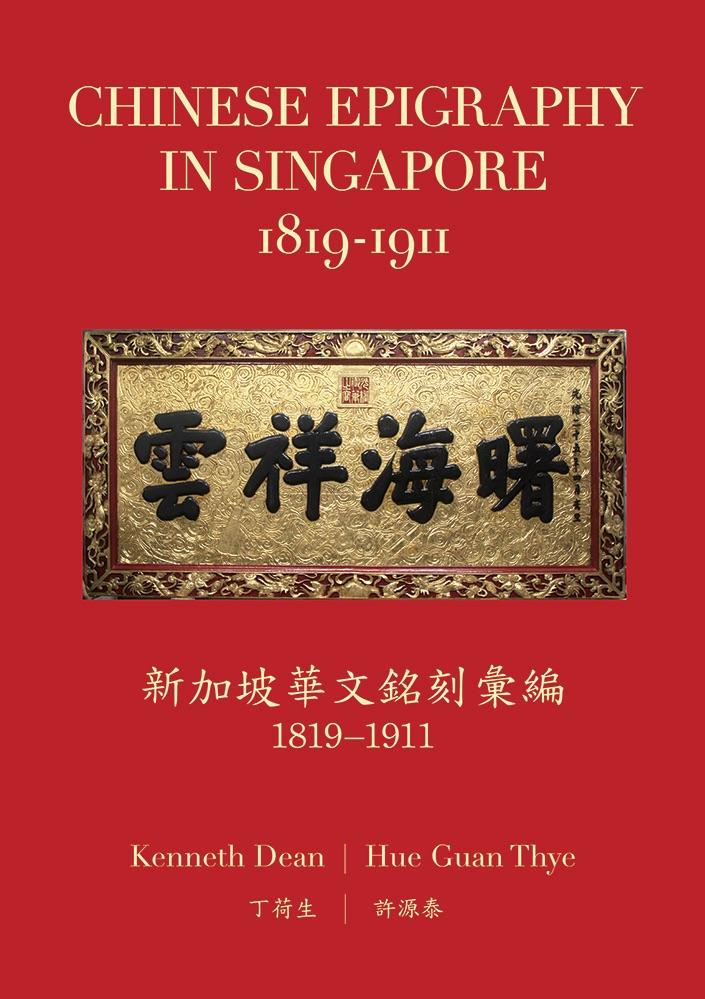
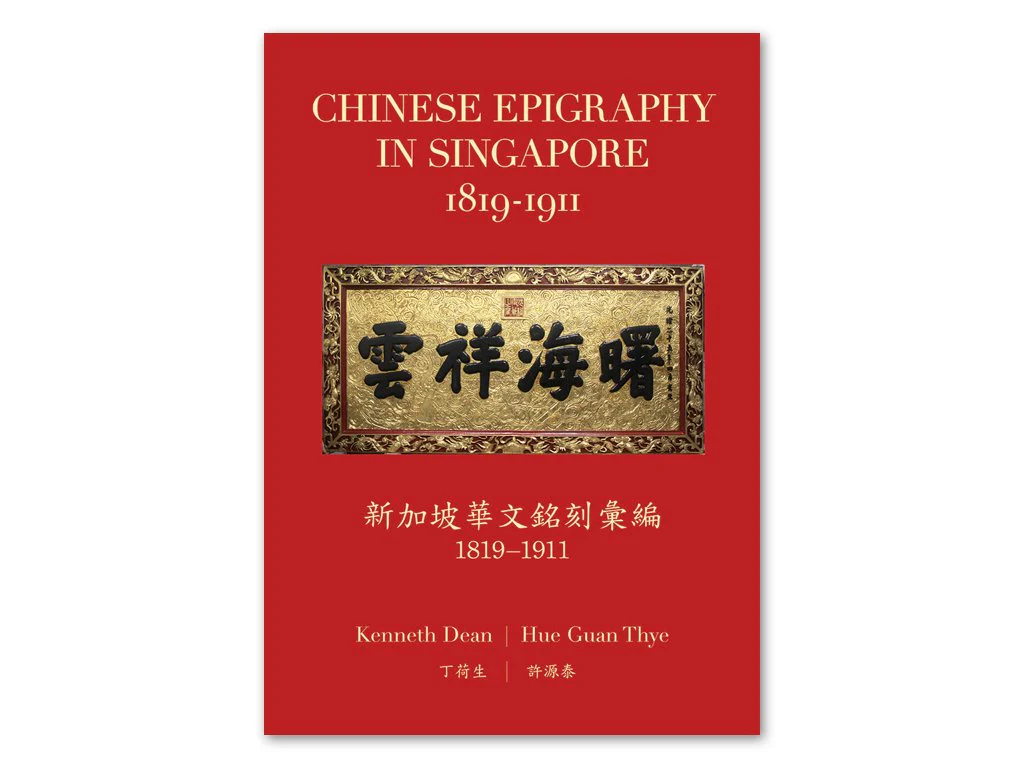
Chinese Epigraphy in Singapore: 1819-1911
- Description
- Praise
- About the Authors
-
The history of Singapore’s Chinese community is carved in stone and wood: in the epigraphic record of 62 Chinese temples, native-place associations, clan and guild halls. These materials include temple plaques, couplets, stone inscriptions, stone and bronze censers, and other inscribed objects found in these institutions. They provide firsthand historical information on the aspirations and contributions of the early generation of Chinese settlers in Singapore.
Early inscriptions reveal the centrality of these institutions to Chinese life in Singapore, while later inscriptions show the many ways that these institutions have evolved over the years. Many have become deeply engaged in social welfare projects, while others have also become centers of transnational networks. These materials, available in Chinese and in English translation, open a window into the world of Chinese communities in Singapore. These cultural artifacts can also be appreciated for their exceptional artistic value. They are a central part of the heritage of Singapore.
-
“There is no doubt that this new collection of epigraphic material constitutes a repository of Singapore cultural and historical heritage, and will become an indispensable tool for all the scholars interested in that country.”
- Claudine Salmon, Director of Research Emeritus at the French National Centre for Scientific Research (CNRS), Paris -
Kenneth Dean is professor at the Asia Research Institute and head of the Department of Chinese Studies, National University of Singapore.
Hue Guan Thye is a senior research fellow at the Department of Chinese Studies, National University of Singapore.
Product Information
Product Information
Shipping & Returns
Shipping & Returns
Description
- Description
- Praise
- About the Authors
-
The history of Singapore’s Chinese community is carved in stone and wood: in the epigraphic record of 62 Chinese temples, native-place associations, clan and guild halls. These materials include temple plaques, couplets, stone inscriptions, stone and bronze censers, and other inscribed objects found in these institutions. They provide firsthand historical information on the aspirations and contributions of the early generation of Chinese settlers in Singapore.
Early inscriptions reveal the centrality of these institutions to Chinese life in Singapore, while later inscriptions show the many ways that these institutions have evolved over the years. Many have become deeply engaged in social welfare projects, while others have also become centers of transnational networks. These materials, available in Chinese and in English translation, open a window into the world of Chinese communities in Singapore. These cultural artifacts can also be appreciated for their exceptional artistic value. They are a central part of the heritage of Singapore.
-
“There is no doubt that this new collection of epigraphic material constitutes a repository of Singapore cultural and historical heritage, and will become an indispensable tool for all the scholars interested in that country.”
- Claudine Salmon, Director of Research Emeritus at the French National Centre for Scientific Research (CNRS), Paris -
Kenneth Dean is professor at the Asia Research Institute and head of the Department of Chinese Studies, National University of Singapore.
Hue Guan Thye is a senior research fellow at the Department of Chinese Studies, National University of Singapore.