Honourable Mansion: The Invisible Hands Behind Singapore’s Last Traditional Teochew House
- Description
- Praise
- About the Author
-
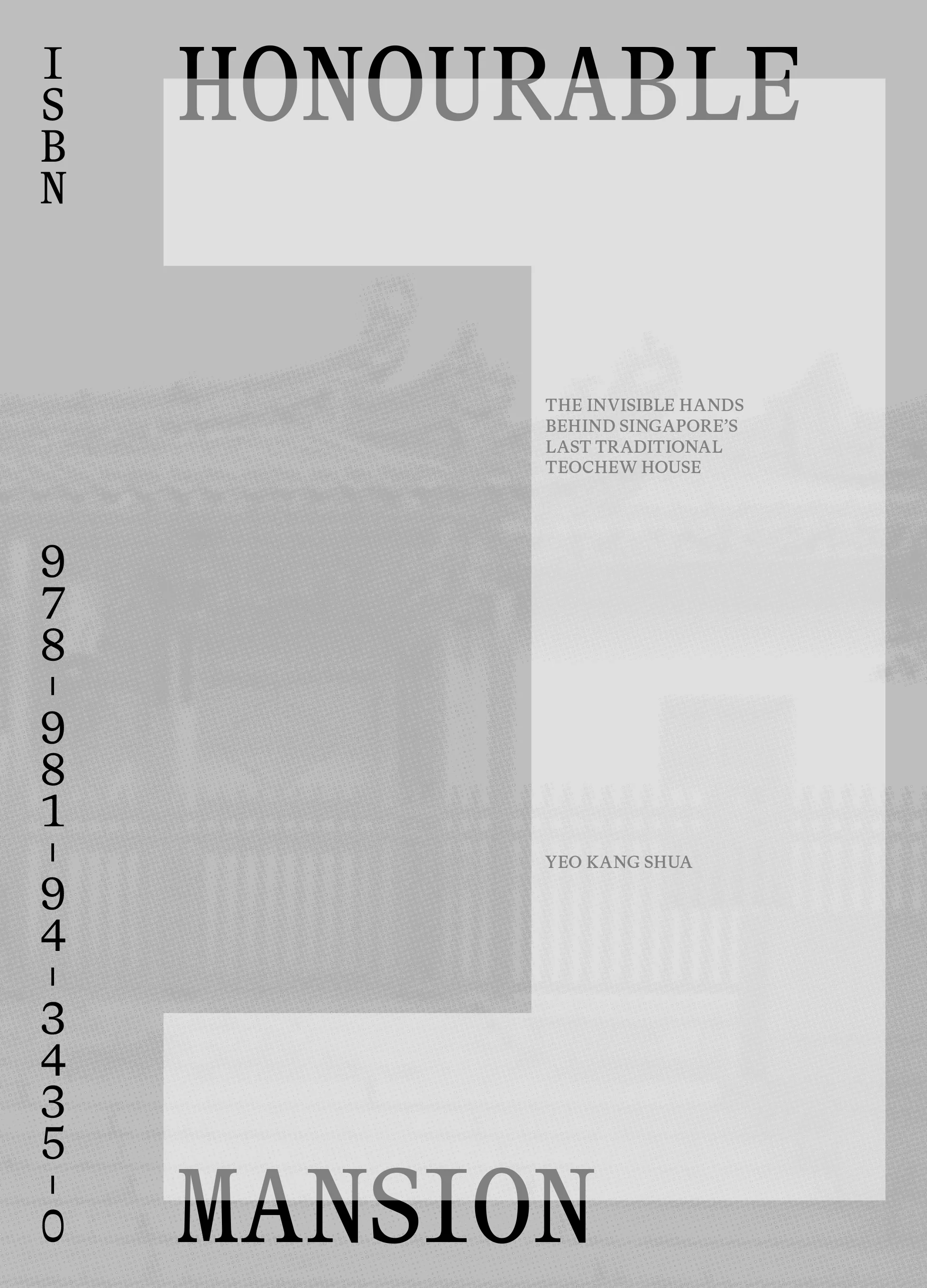
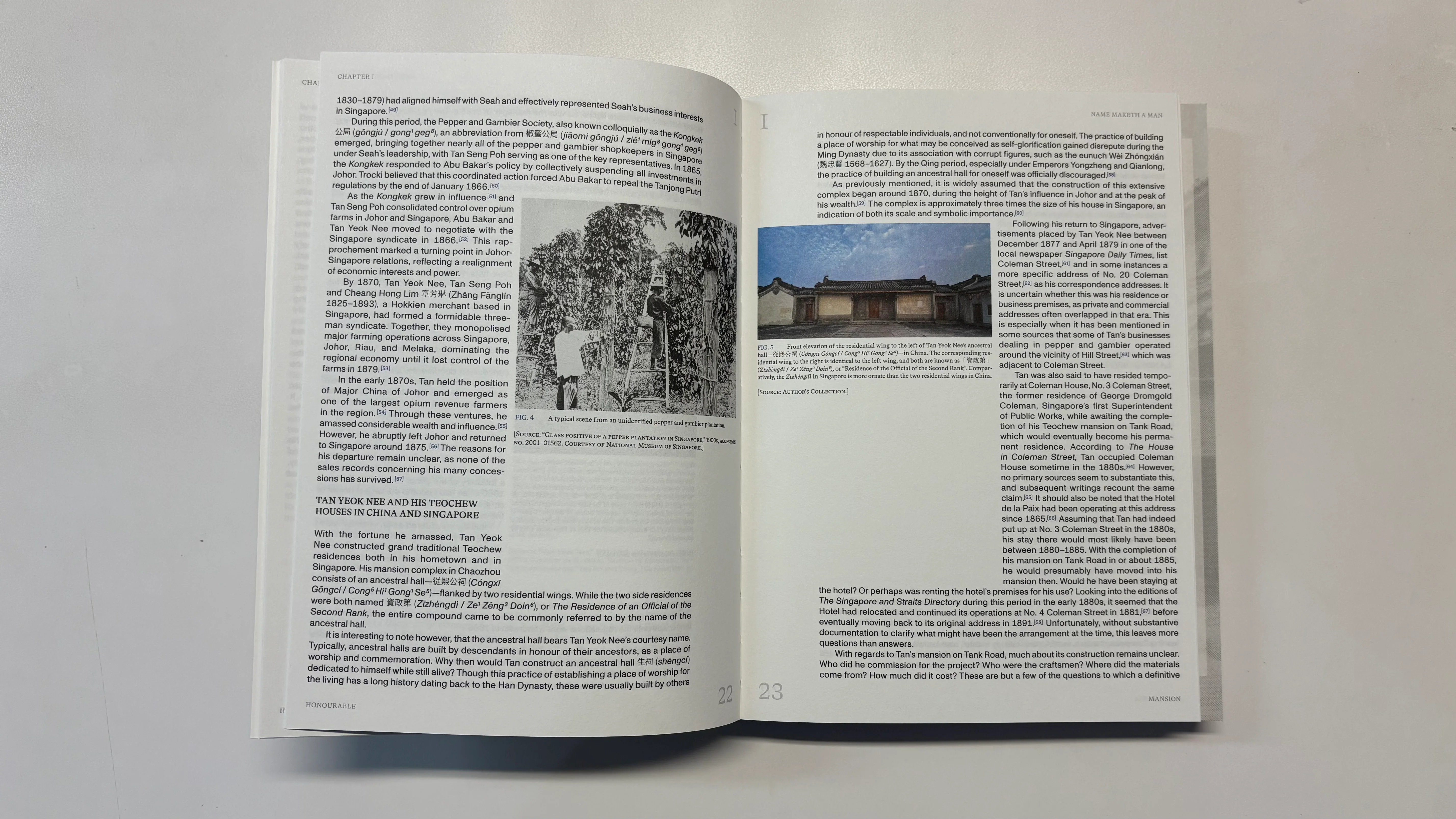
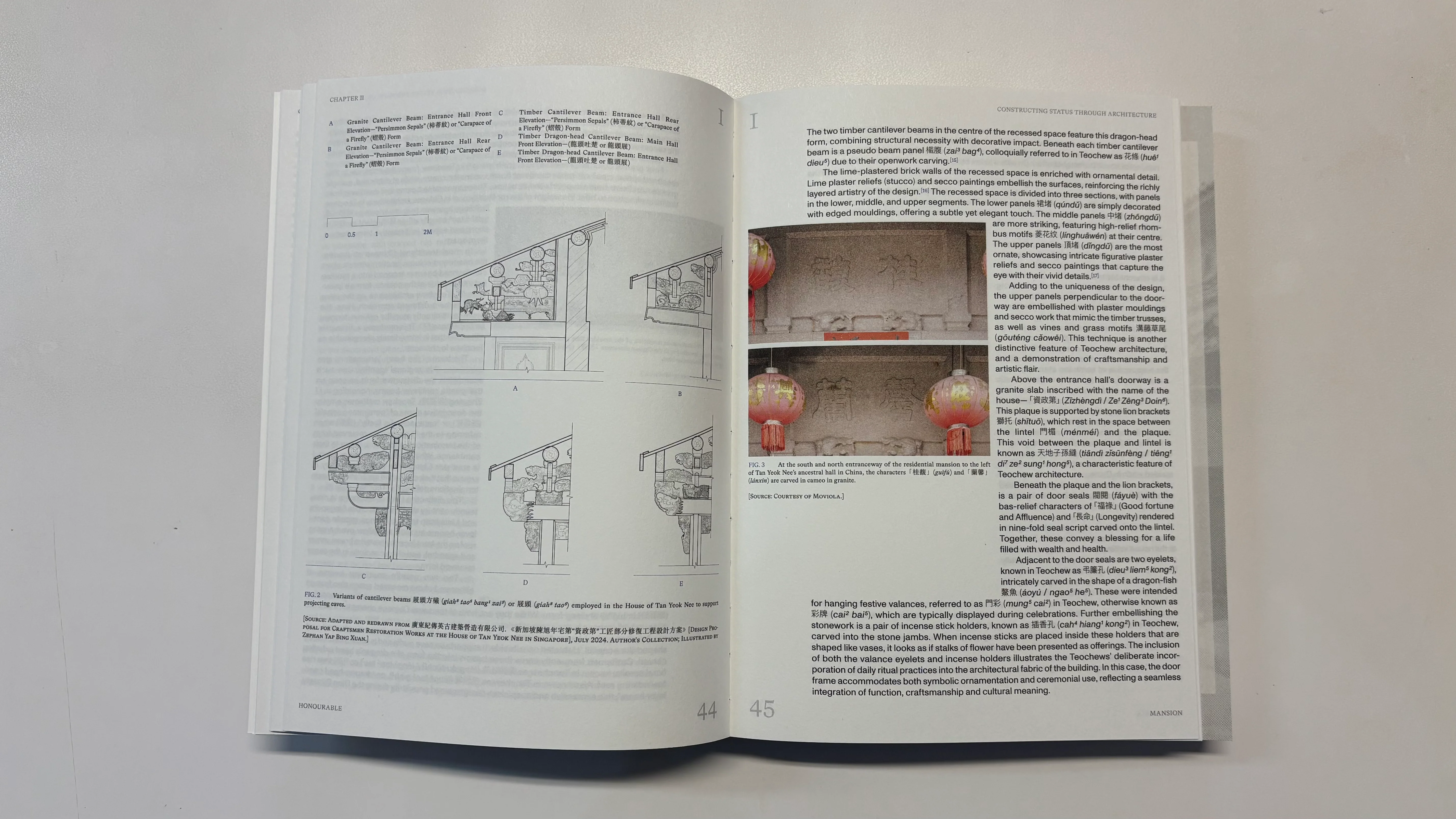
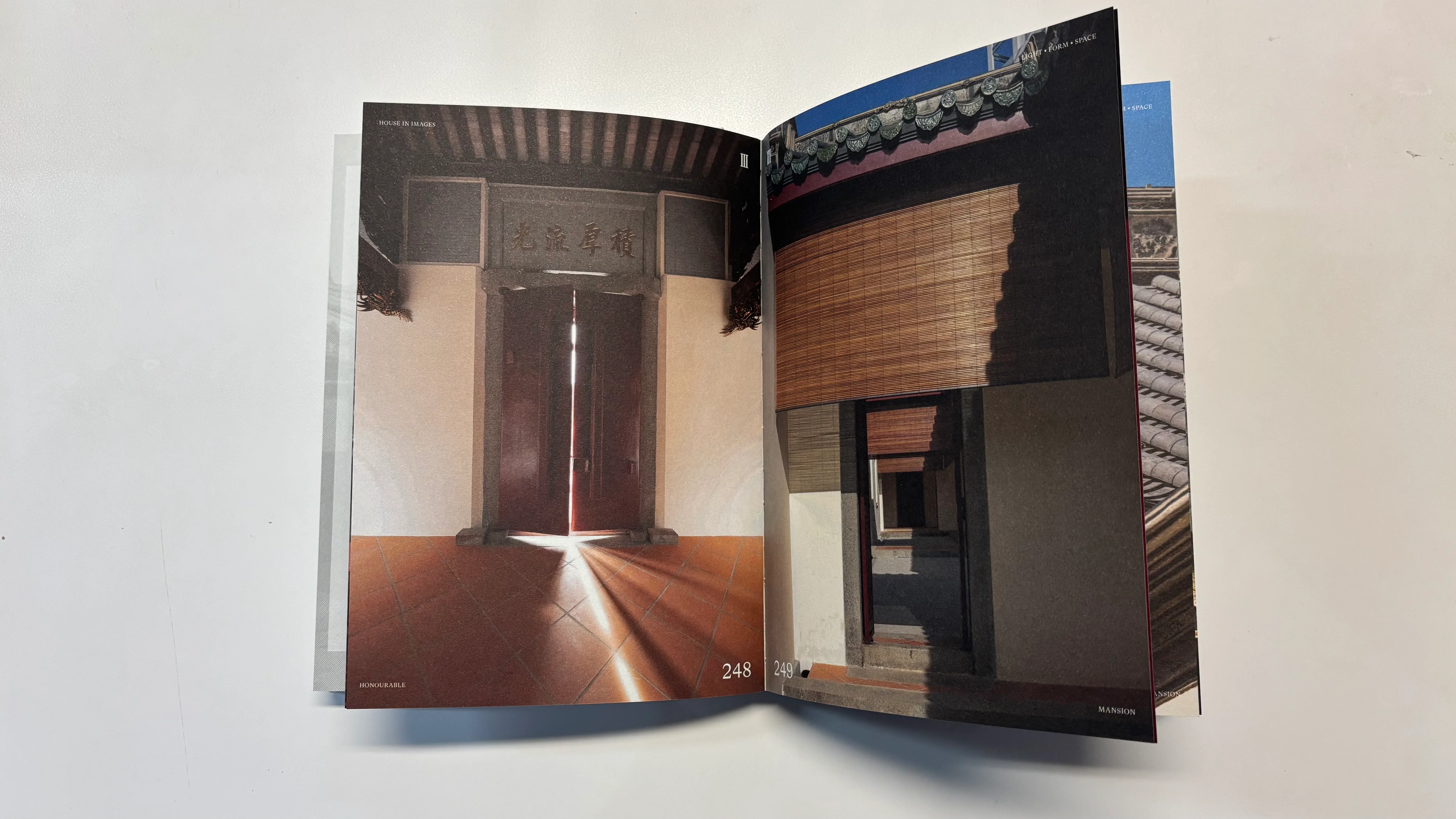
In the heart of Singapore, just off Orchard Road, the House of Tan Yeok Nee stands as the last surviving traditional Teochew courtyard mansion in the city-state. In a landscape transformed by rapid redevelopment, this rare architectural relic offers a tangible link to the values, aspirations, and craftsmanship of Singapore’s early Chinese communities.
Built in the late nineteenth century by Tan Yeok Nee, a wealthy Teochew merchant with close ties to the Johor royal court, the house has served many roles: private residence, girls’ home, religious institution, and restored heritage landmark. Despite these transitions, its physical fabric has retained a remarkable degree of authenticity. This book traces the house’s evolution through detailed analysis of its architectural form, restoration history, and social context, arguing for the importance of material culture and architectural history as rich sources of historical insight.
By closely reading the building’s structure, ornamentation, and adaptations over time, the book shows how it serves not only as heritage but as an architectural palimpsest. In doing so, it offers an alternative lens on Singapore’s past, rooted not just in archives, but in the meanings embedded in built space.
Blending narrative clarity with academic rigour, this book will appeal to general readers, heritage professionals, and scholars interested in architecture, conservation, and Southeast Asian history. The House of Tan Yeok Nee is more than a national monument, it is a vessel of memory, a witness to change, and a vital part of Singapore’s cultural legacy.
-
“Yeo delivers an exceptional history of the House of Tan Yeok Nee with exemplary rigour and clarity. He traces the mansion from private residence to public use, and to its recent restoration. Along the way he illuminates the intricacies of traditional Chinese construction, and explains how evidence, craft, and judgement inform conservation best practices. The result is more than a case study: it sets a benchmark for architectural conservation in Singapore and the region, and offers readers, from students to specialists, a rare blend of scholarly insight and engaging narrative.”
—William Chapman, heritage conservation academic; Director of the Historic Preservation Programme, University of Hawai‘i at Mānoa“The House of Tan Yeok Nee is fortunate to have been documented with such detail and care. Yeo presents an impressive documentation of its architectural and social history, tracing the residence from its late-nineteenth-century origins to the most recent restoration. As the sole survivor of the ‘Four Great Mansions’ built by leading Teochew merchants, it is a significant monument in Singapore’s history. Yeo carefully reconstructs the successive renovations since the early twentieth century, clarifying what changed and why, in preparation for the latest restoration of the mansion which he has been involved in.”
—Kwa Chong Guan, historian; co-author of Seven Hundred Years: A History of Singapore, and co-editor of A General History of the Chinese in Singapore“As Yeo reflects on the granite inscription 資政第 (Zīzhèngdì), he offers a nuanced interpretation that the House of Tan Yeok Nee is ‘a declaration of identity, ambition, and belonging’. His deep knowledge of Chinese architectural heritage, coupled with years of restoration practice, allows him to craft with quiet authority a masterful work of authorship and scholarship, informed by conservation praxis. Page by page, discoveries unfold—architectural and human alike. Few works match its blend of technical depth, literary clarity, and visual storytelling. A landmark contribution that sets a new benchmark for architectural historiography in Singapore and the wider Asia–Pacific region.”
—Laurence Loh, conservation architect; owner of the Cheong Fatt Tze Mansion (The Blue Mansion), George Town, Malaysia -
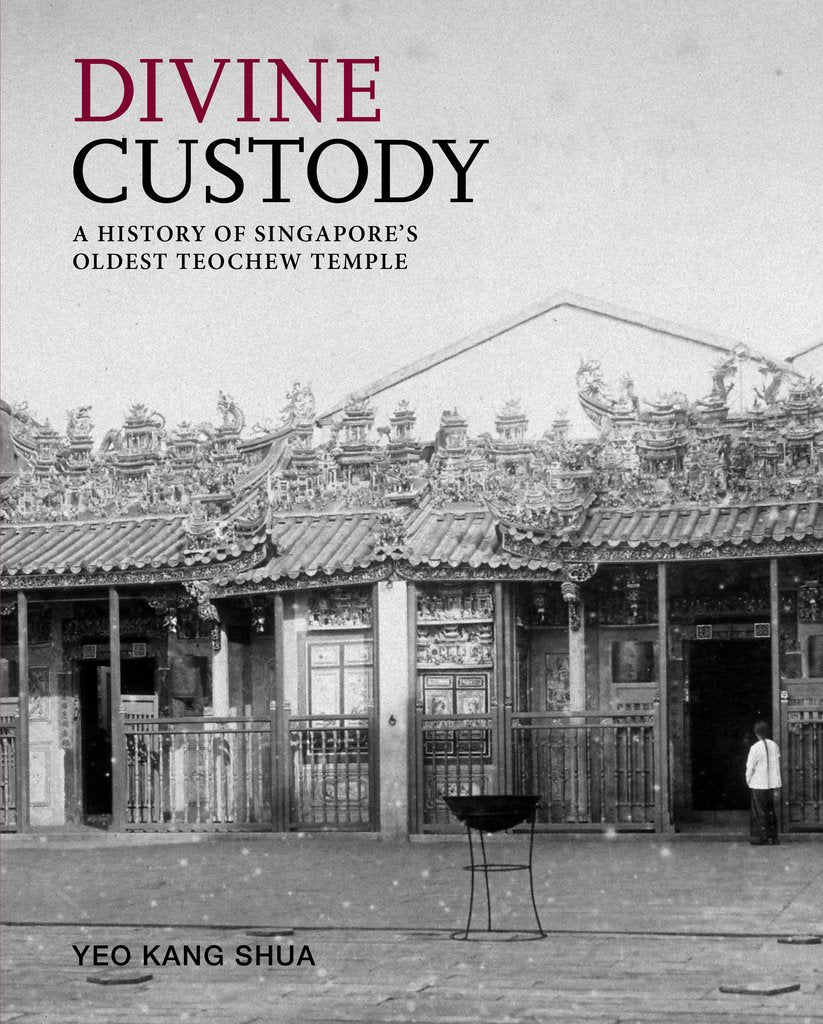
Yeo Kang Shua is Associate Professor and Hokkien Foundation Professor in Architectural Conservation at the Singapore University of Technology and Design. He specialises in Singapore and Southeast Asia’s architectural history and conservation, with special interest in the built heritage of Chinese diaspora. His previous books,《 粵 海清廟:建築與歷史的對話 》(ASD Press, 2020) and Divine Custody: A History of Singapore’s Oldest Teochew Temple (NUS Press, 2021), explore Teochew religious architecture in Singapore. This book on the House of Tan Yeok Nee focuses on the residential tradition, offering a complementary perspective on Teochew architectural expression in the city-state.
Product Information
Product Information
Shipping & Returns
Shipping & Returns
Description
- Description
- Praise
- About the Author
-
In the heart of Singapore, just off Orchard Road, the House of Tan Yeok Nee stands as the last surviving traditional Teochew courtyard mansion in the city-state. In a landscape transformed by rapid redevelopment, this rare architectural relic offers a tangible link to the values, aspirations, and craftsmanship of Singapore’s early Chinese communities.
Built in the late nineteenth century by Tan Yeok Nee, a wealthy Teochew merchant with close ties to the Johor royal court, the house has served many roles: private residence, girls’ home, religious institution, and restored heritage landmark. Despite these transitions, its physical fabric has retained a remarkable degree of authenticity. This book traces the house’s evolution through detailed analysis of its architectural form, restoration history, and social context, arguing for the importance of material culture and architectural history as rich sources of historical insight.
By closely reading the building’s structure, ornamentation, and adaptations over time, the book shows how it serves not only as heritage but as an architectural palimpsest. In doing so, it offers an alternative lens on Singapore’s past, rooted not just in archives, but in the meanings embedded in built space.
Blending narrative clarity with academic rigour, this book will appeal to general readers, heritage professionals, and scholars interested in architecture, conservation, and Southeast Asian history. The House of Tan Yeok Nee is more than a national monument, it is a vessel of memory, a witness to change, and a vital part of Singapore’s cultural legacy.
-
“Yeo delivers an exceptional history of the House of Tan Yeok Nee with exemplary rigour and clarity. He traces the mansion from private residence to public use, and to its recent restoration. Along the way he illuminates the intricacies of traditional Chinese construction, and explains how evidence, craft, and judgement inform conservation best practices. The result is more than a case study: it sets a benchmark for architectural conservation in Singapore and the region, and offers readers, from students to specialists, a rare blend of scholarly insight and engaging narrative.”
—William Chapman, heritage conservation academic; Director of the Historic Preservation Programme, University of Hawai‘i at Mānoa“The House of Tan Yeok Nee is fortunate to have been documented with such detail and care. Yeo presents an impressive documentation of its architectural and social history, tracing the residence from its late-nineteenth-century origins to the most recent restoration. As the sole survivor of the ‘Four Great Mansions’ built by leading Teochew merchants, it is a significant monument in Singapore’s history. Yeo carefully reconstructs the successive renovations since the early twentieth century, clarifying what changed and why, in preparation for the latest restoration of the mansion which he has been involved in.”
—Kwa Chong Guan, historian; co-author of Seven Hundred Years: A History of Singapore, and co-editor of A General History of the Chinese in Singapore“As Yeo reflects on the granite inscription 資政第 (Zīzhèngdì), he offers a nuanced interpretation that the House of Tan Yeok Nee is ‘a declaration of identity, ambition, and belonging’. His deep knowledge of Chinese architectural heritage, coupled with years of restoration practice, allows him to craft with quiet authority a masterful work of authorship and scholarship, informed by conservation praxis. Page by page, discoveries unfold—architectural and human alike. Few works match its blend of technical depth, literary clarity, and visual storytelling. A landmark contribution that sets a new benchmark for architectural historiography in Singapore and the wider Asia–Pacific region.”
—Laurence Loh, conservation architect; owner of the Cheong Fatt Tze Mansion (The Blue Mansion), George Town, Malaysia -
Yeo Kang Shua is Associate Professor and Hokkien Foundation Professor in Architectural Conservation at the Singapore University of Technology and Design. He specialises in Singapore and Southeast Asia’s architectural history and conservation, with special interest in the built heritage of Chinese diaspora. His previous books,《 粵 海清廟:建築與歷史的對話 》(ASD Press, 2020) and Divine Custody: A History of Singapore’s Oldest Teochew Temple (NUS Press, 2021), explore Teochew religious architecture in Singapore. This book on the House of Tan Yeok Nee focuses on the residential tradition, offering a complementary perspective on Teochew architectural expression in the city-state.