Kampung Tempe
- Description
- About the Author
-
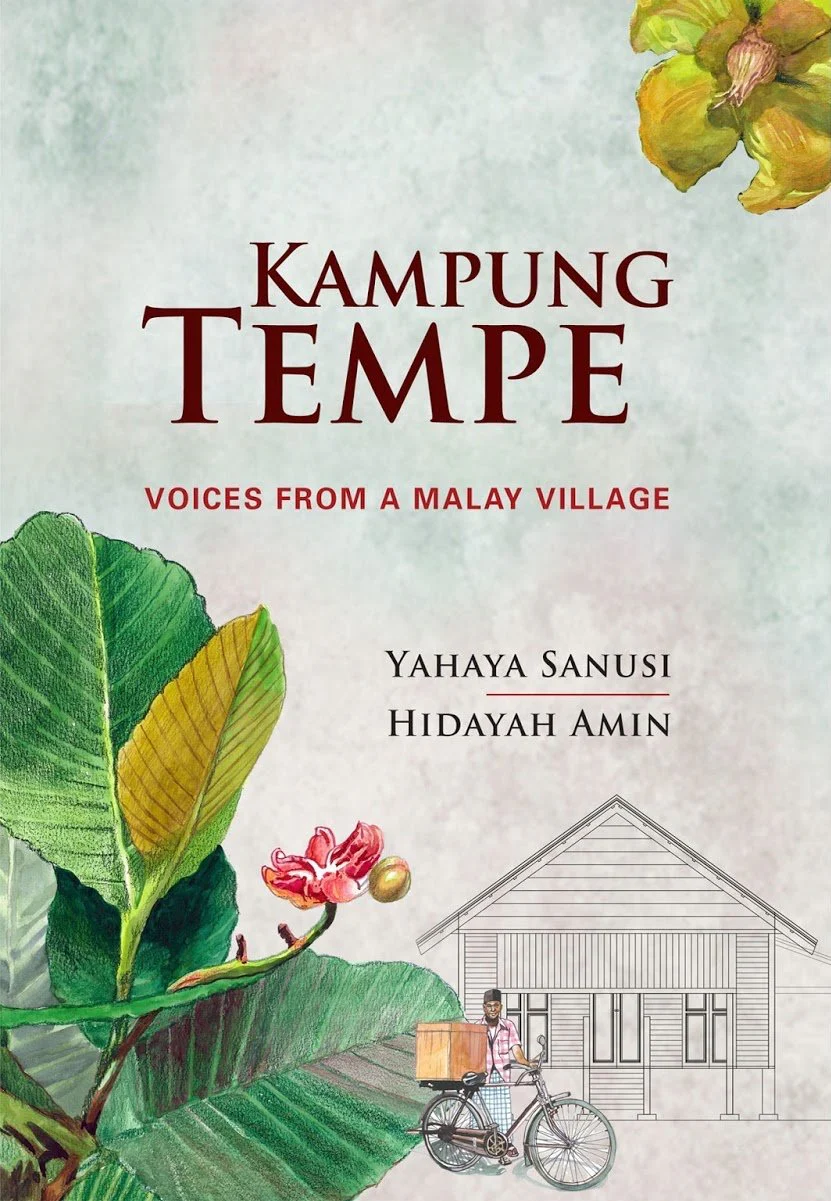
In early 1905, a group of Javanese led by Alias bin Ali, started a settlement on a hillside in Singapore, not far from the present Sixth Avenue, off Bukit Timah Road. The swampy land then was infested with mosquitoes and quite uninhabitable. Despite the challenging circumstances, the Javanese settlers, most of whom were farmers and gardeners, successfully cultivated vegetables such as tapioca, chili, and even tobacco.
A hundred years later, the village disappeared. The only visual testament to the prior existence of the village – sited on one of the most expensive residential areas in Singapore – is a small mosque named Masjid Al-Huda, located along Jalan Haji Alias.
This book conveys fragments of the village’s history and retells stories from the bygone days of the early settlement, such as the villagers’ fear of living in bunkers during the war, and their struggle sourcing for food that led them to produce tempe or fermented soya bean cakes, for which the village later came to be known.
-
Hidayah Amin had her first short story published when she was 11 years old. It was only when she lost her childhood home that she resumed writing and published Gedung Kuning in 2010. She has since written four non-fiction books (Malay Weddings Don’t Cost $50; Kampung Tempe; Bahasa) and three children’s books, including the award-winning The Mango Tree. (Mina Meets Cambridge; My Name is Mikhail: I have cerebral palsy).
One of the unique formats of her children’s books is the use of the dyslexie font which is suitable for readers with dyslexia. She has also published a series of books that come in Braille to cater to the needs of the visually impaired. In 2017, she has also published for other authors such as The Rain Tree by Lee Seow Ser, and My Name is Nadia: I have Autism by Huda Patel.
Original: $32.00
-65%$32.00
$11.20Product Information
Product Information
Shipping & Returns
Shipping & Returns
Description
- Description
- About the Author
-
In early 1905, a group of Javanese led by Alias bin Ali, started a settlement on a hillside in Singapore, not far from the present Sixth Avenue, off Bukit Timah Road. The swampy land then was infested with mosquitoes and quite uninhabitable. Despite the challenging circumstances, the Javanese settlers, most of whom were farmers and gardeners, successfully cultivated vegetables such as tapioca, chili, and even tobacco.
A hundred years later, the village disappeared. The only visual testament to the prior existence of the village – sited on one of the most expensive residential areas in Singapore – is a small mosque named Masjid Al-Huda, located along Jalan Haji Alias.
This book conveys fragments of the village’s history and retells stories from the bygone days of the early settlement, such as the villagers’ fear of living in bunkers during the war, and their struggle sourcing for food that led them to produce tempe or fermented soya bean cakes, for which the village later came to be known.
-
Hidayah Amin had her first short story published when she was 11 years old. It was only when she lost her childhood home that she resumed writing and published Gedung Kuning in 2010. She has since written four non-fiction books (Malay Weddings Don’t Cost $50; Kampung Tempe; Bahasa) and three children’s books, including the award-winning The Mango Tree. (Mina Meets Cambridge; My Name is Mikhail: I have cerebral palsy).
One of the unique formats of her children’s books is the use of the dyslexie font which is suitable for readers with dyslexia. She has also published a series of books that come in Braille to cater to the needs of the visually impaired. In 2017, she has also published for other authors such as The Rain Tree by Lee Seow Ser, and My Name is Nadia: I have Autism by Huda Patel.