Liberalism and the Postcolony
- Description
- Praise
- About the Author
-
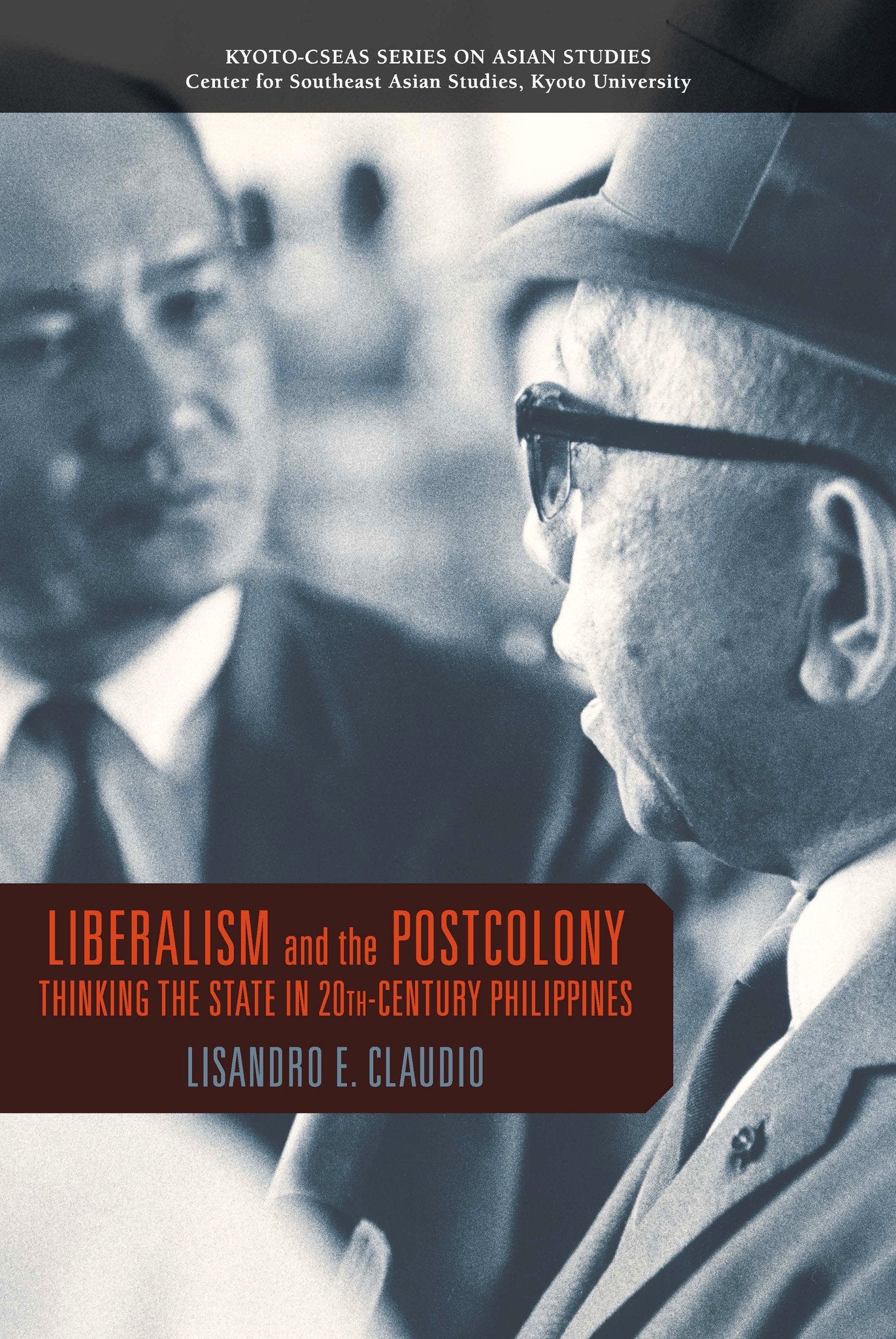
Extricating liberalism from the haze of anti-modernist and anti-European caricature, this book traces the role of liberal philosophy in the building of a new nation. It examines the role of toleration, rights, and mediation in the postcolony. Through the biographies of four Filipino scholar-bureaucrats—Camilo Osias, Salvador Araneta, Carlos P. Romulo, and Salvador P. Lopez—Lisandro E. Claudio argues that liberal thought served as the grammar of Filipino democracy in the 20th century. By looking at various articulations of liberalism in pedagogy, international affairs, economics, and literature, Claudio not only narrates an obscured history of the Philippine state, he also argues for a new liberalism rooted in the postcolonial experience, a timely intervention considering current developments in politics in Southeast Asia.
-
“In this compelling and important book, Lisandro Claudio documents the influence of liberal intellectuals in imagining—and building—the Filipino nation. This is a timely book—illiberalism and populism are on the rise worldwide. Will liberal democracy survive the current challenges? We don’t know, but Claudio makes us better equipped to grapple with this important question.”
— Sheila S. Coronel, Dean of Academic Affairs, Graduate School of Journalism, Columbia University"This book springs forward—boldly, engagingly—from Lisandro Claudio’s grappling with our present-day Crisis of Modernity, where the public intellectual’s space for discourse, opportunity for engaging wider society, and ability to, have become increasingly limited. This book is, in more ways than one, a young man’s manifesto of faith; it is not just a passing of the torch from the previous generation of scholars, but an assertion that there will continue to be scholars engaged in the pressing problems of our present."
— Manuel L. Quezon III, Columnist and Editor, Philippine Daily Inquirer"By grounding the study in intellectual biographies, and building towards an a posteriori definition of liberalism, the author succeeds in developing an argument that is dynamic, persuasive, sensitive to the human particulars of person, time, and place, yet expansive in its appreciation of global interconnections in the idea and practice of liberalism."
— Resil B. Mojares, Professor Emeritus, University of San Carlos-Cebu City"This is not simply a book about intellectual history involving short biographical chapters of four influential Filipino liberals. It is also a passionate defense of liberalism at a time when it is in crisis both intellectually and politically in the country."
— Mark R. Thompson, Department of Asian and International Studies,City University of Hong Kong -
Lisandro E. Claudio is an associate professor at the Department of History, De La Salle University, Manila.
Original: $38.00
-65%$38.00
$13.30Product Information
Product Information
Shipping & Returns
Shipping & Returns
Description
- Description
- Praise
- About the Author
-
Extricating liberalism from the haze of anti-modernist and anti-European caricature, this book traces the role of liberal philosophy in the building of a new nation. It examines the role of toleration, rights, and mediation in the postcolony. Through the biographies of four Filipino scholar-bureaucrats—Camilo Osias, Salvador Araneta, Carlos P. Romulo, and Salvador P. Lopez—Lisandro E. Claudio argues that liberal thought served as the grammar of Filipino democracy in the 20th century. By looking at various articulations of liberalism in pedagogy, international affairs, economics, and literature, Claudio not only narrates an obscured history of the Philippine state, he also argues for a new liberalism rooted in the postcolonial experience, a timely intervention considering current developments in politics in Southeast Asia.
-
“In this compelling and important book, Lisandro Claudio documents the influence of liberal intellectuals in imagining—and building—the Filipino nation. This is a timely book—illiberalism and populism are on the rise worldwide. Will liberal democracy survive the current challenges? We don’t know, but Claudio makes us better equipped to grapple with this important question.”
— Sheila S. Coronel, Dean of Academic Affairs, Graduate School of Journalism, Columbia University"This book springs forward—boldly, engagingly—from Lisandro Claudio’s grappling with our present-day Crisis of Modernity, where the public intellectual’s space for discourse, opportunity for engaging wider society, and ability to, have become increasingly limited. This book is, in more ways than one, a young man’s manifesto of faith; it is not just a passing of the torch from the previous generation of scholars, but an assertion that there will continue to be scholars engaged in the pressing problems of our present."
— Manuel L. Quezon III, Columnist and Editor, Philippine Daily Inquirer"By grounding the study in intellectual biographies, and building towards an a posteriori definition of liberalism, the author succeeds in developing an argument that is dynamic, persuasive, sensitive to the human particulars of person, time, and place, yet expansive in its appreciation of global interconnections in the idea and practice of liberalism."
— Resil B. Mojares, Professor Emeritus, University of San Carlos-Cebu City"This is not simply a book about intellectual history involving short biographical chapters of four influential Filipino liberals. It is also a passionate defense of liberalism at a time when it is in crisis both intellectually and politically in the country."
— Mark R. Thompson, Department of Asian and International Studies,City University of Hong Kong -
Lisandro E. Claudio is an associate professor at the Department of History, De La Salle University, Manila.