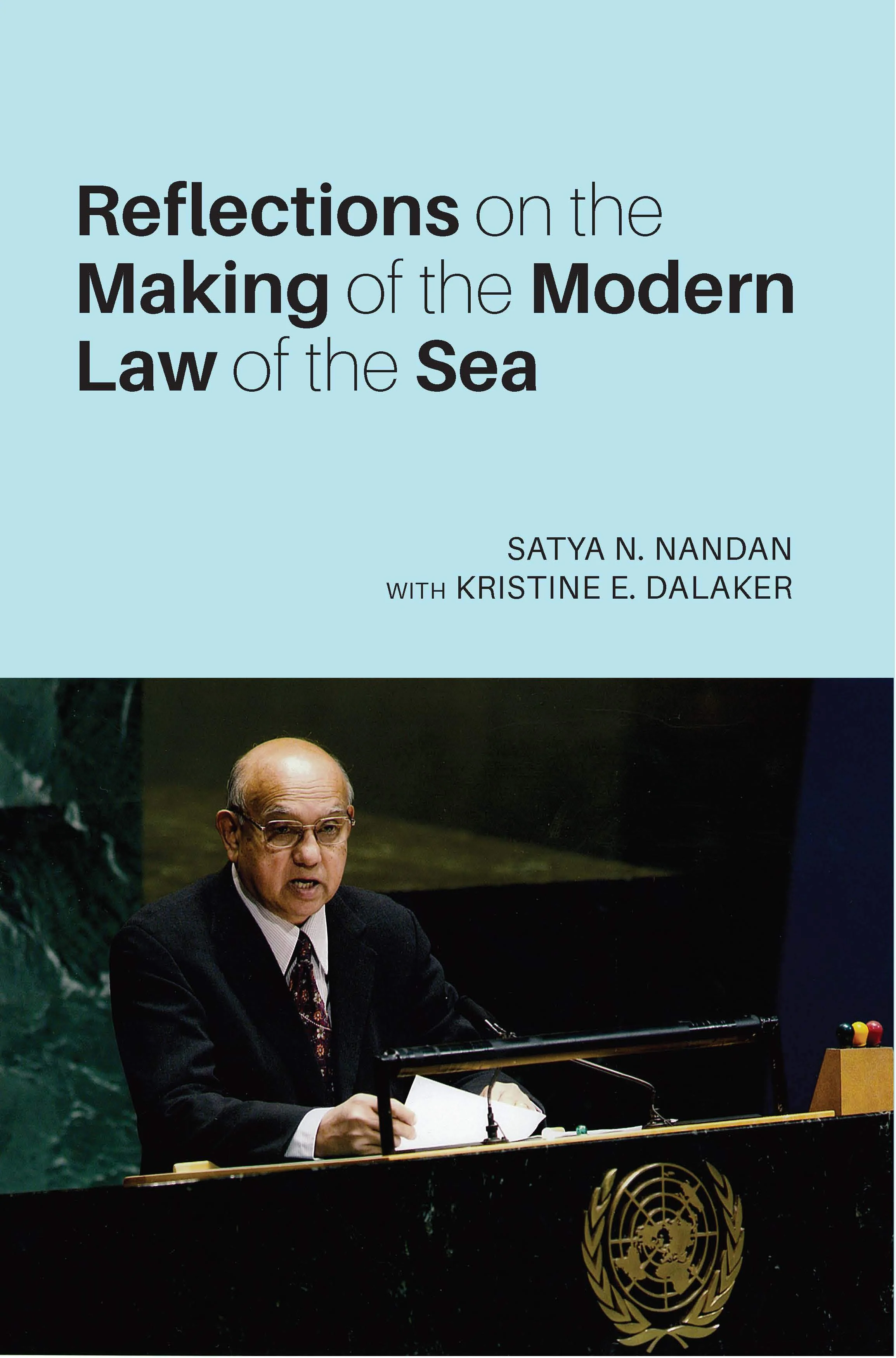
Reflections on the Making of the Modern Law of the Sea
- Description
- Praise
- About the Authors
-
The United Nations Convention on the Law of the Sea (UNCLOS) is one of the most successful agreements to govern the global commons. If it is a constitution for the oceans, Satya Nandan is one of the founders: one of the few key personalities behind the agreement, and the subsequent development of the law of the sea in the decades since UNCLOS was adopted. He led the drafting of the key negotiating text, most of which made its way, unaltered, into the Convention’s final text.
How did a lawyer from the Pacific nation of Fiji come to play such a pivotal role in this important area of diplomacy and international law? Armed with his trademark pencil, Nandan used his creativity, pragmatism and penchant for language to reach compromise and build consensus at nearly every stage in the making of the modern law of the sea. In this book, he elaborates on the techniques and skills he brought to bear on this task, the alliances he formed with colleagues from different countries and the strategies that worked in this complex, multi-dimensional negotiation. At a time when the stakes involved in managing the global commons could not be higher, Nandan’s experience and wisdom could not be more relevant and important. -
“This is the most important book that has been written on the UN Convention on the Law of the Sea. It is an indispensable guide to any student, teacher, lawyer, diplomat, judge, who is interested in UNCLOS and the making of the modern law of the sea.”
– Ambassador Tommy Koh
-
Satya Nandan was a Fijian diplomat and lawyer who specialised in the law of the sea. He served three consecutive terms as the Secretary-General of the International Seabed Authority.
Kristine Dalaker is a Research Fellow at the Norwegian Centre for the Law of the Sea in Tromsø, Norway, where she focuses on ocean governance issues. She was previously the Associate Director (Administration and Special Projects) at the Centre for International Law in Singapore.
Product Information
Product Information
Shipping & Returns
Shipping & Returns
Description
- Description
- Praise
- About the Authors
-
The United Nations Convention on the Law of the Sea (UNCLOS) is one of the most successful agreements to govern the global commons. If it is a constitution for the oceans, Satya Nandan is one of the founders: one of the few key personalities behind the agreement, and the subsequent development of the law of the sea in the decades since UNCLOS was adopted. He led the drafting of the key negotiating text, most of which made its way, unaltered, into the Convention’s final text.
How did a lawyer from the Pacific nation of Fiji come to play such a pivotal role in this important area of diplomacy and international law? Armed with his trademark pencil, Nandan used his creativity, pragmatism and penchant for language to reach compromise and build consensus at nearly every stage in the making of the modern law of the sea. In this book, he elaborates on the techniques and skills he brought to bear on this task, the alliances he formed with colleagues from different countries and the strategies that worked in this complex, multi-dimensional negotiation. At a time when the stakes involved in managing the global commons could not be higher, Nandan’s experience and wisdom could not be more relevant and important. -
“This is the most important book that has been written on the UN Convention on the Law of the Sea. It is an indispensable guide to any student, teacher, lawyer, diplomat, judge, who is interested in UNCLOS and the making of the modern law of the sea.”
– Ambassador Tommy Koh
-
Satya Nandan was a Fijian diplomat and lawyer who specialised in the law of the sea. He served three consecutive terms as the Secretary-General of the International Seabed Authority.
Kristine Dalaker is a Research Fellow at the Norwegian Centre for the Law of the Sea in Tromsø, Norway, where she focuses on ocean governance issues. She was previously the Associate Director (Administration and Special Projects) at the Centre for International Law in Singapore.