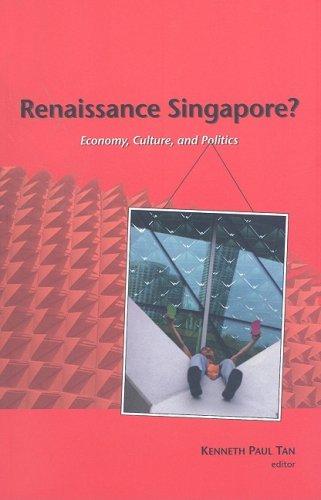
Renaissance Singapore?
- Description
- About the Editor
-
In this collection, public intellectuals and civil society activists discuss Singapore's public rhetoric about liberalization and its association with the development of a creative economy, focusing on questions surrounding conservatism, national identity and values, civil society activism, and the societal role of the younger generation. Moved by Singapore'sáRenaissance City Report, released in 2000 amidst an uneasy mix of millennial celebration and pessimism arising from a prolonged economic downturn, the authors engage with the public rhetoric of Singapore's transformation into a forward-looking, critical, unconventional, open, diverse, participatory, and inclusive society.
- Kenneth Paul Tan is Vice Dean of Academic Affairs and Associate Professor at the Lee Kuan Yew School of Public Policy, National University of Singapore.
Product Information
Product Information
Shipping & Returns
Shipping & Returns
Description
- Description
- About the Editor
-
In this collection, public intellectuals and civil society activists discuss Singapore's public rhetoric about liberalization and its association with the development of a creative economy, focusing on questions surrounding conservatism, national identity and values, civil society activism, and the societal role of the younger generation. Moved by Singapore'sáRenaissance City Report, released in 2000 amidst an uneasy mix of millennial celebration and pessimism arising from a prolonged economic downturn, the authors engage with the public rhetoric of Singapore's transformation into a forward-looking, critical, unconventional, open, diverse, participatory, and inclusive society.
- Kenneth Paul Tan is Vice Dean of Academic Affairs and Associate Professor at the Lee Kuan Yew School of Public Policy, National University of Singapore.