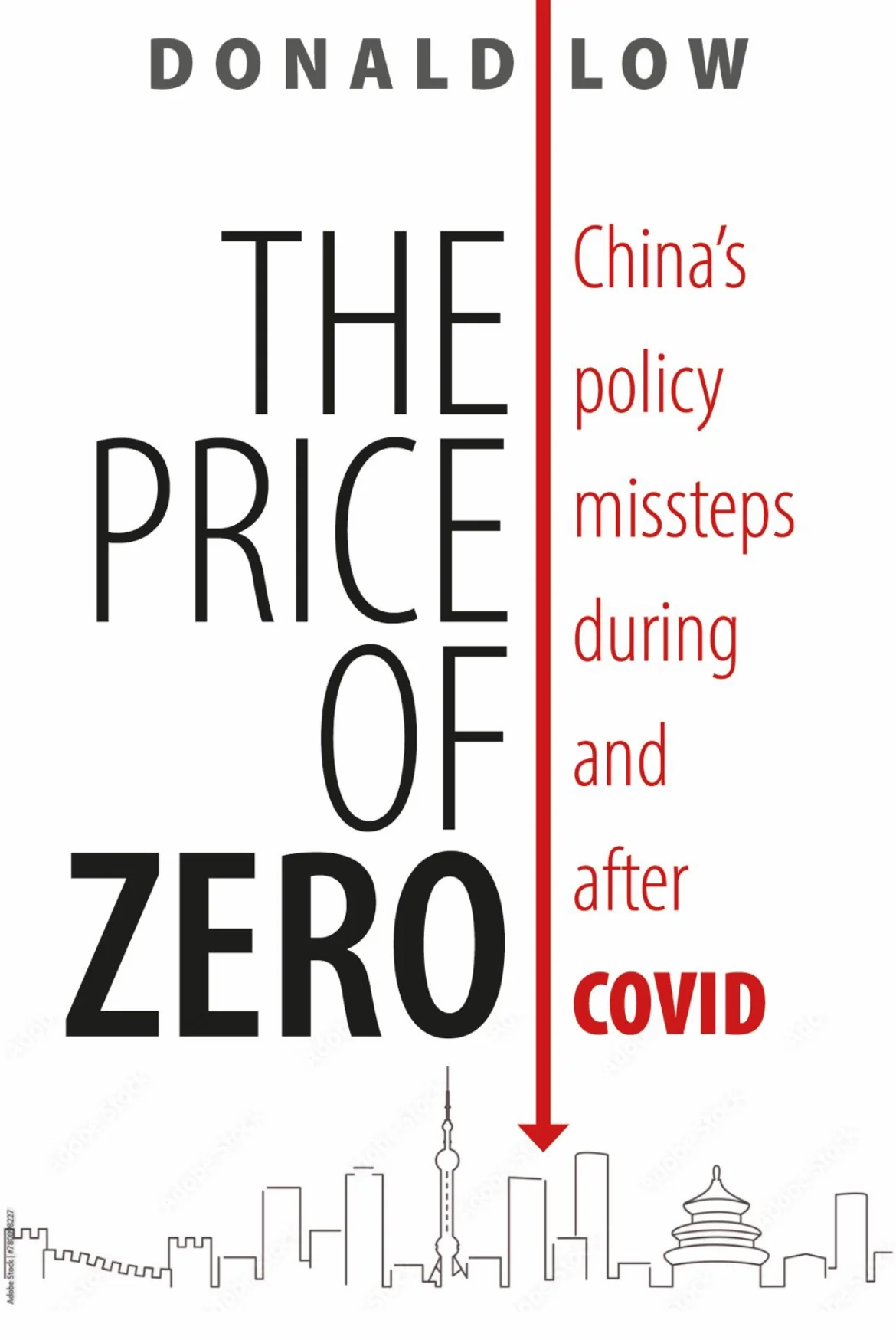
The Price of Zero: China's policy missteps during and after COVID
- Description
- Praise
- About the Author
-
This anthology of essays on the Chinese economy examines the causes and consequences of the zero-Covid policy that China pursued during the pandemic. It argues that initial success with Covid suppression, as well as the failure of most developed countries to contain Covid-19, led to the policy becoming ideology. The dogmatic thinking, hubris, and utopianism that motivated zero-Covid also led to a series of crackdowns on industries that, until recently, were key sources of growth and innovation. The result has been a sharp deceleration of the Chinese economy, falling foreign direct investment, and debt deflation. Meanwhile, the country’s social engineers aim to transform the economy into a techno-utopia that leads the world in the industries of the future. But unless policymakers commit to deeper market reforms and foster a new social contract, China’s economic rise could be in jeopardy.
-
“Donald Low’s incisive, no-holds-barred analysis of China’s current malaise is particularly valuable today - at a time of great uncertainty about where China is heading.”
—Manu Bhaskaran, Founding Director and CEO, Centennial Asia Advisors“At a time when Covid and its consequences are receding from our memory, these pieces are an important historical record not only of the policy responses, but also of the roads not taken. They are a potentially important resource if we are unfortunate enough to experience another pandemic.”
—Cameron Campbell, Co-author of Fate and Fortune in Rural China and Life under Pressure: Mortality and Living Standards in Europe and Asia, 1700-1900“Grounded in behavioural economics and complexity science, Low's astute observations provide fresh insights into the perils of hubris and utopianism in policymaking.”
—Naubahar Sharif, Hong Kong University of Science and Technology“Written with candour and courage, these essays hold power accountable while highlighting opportunities for recovery and reform.”
—Serene Koh, Director, Behavioural Insights Team Singapore -
Donald Low is Senior Lecturer and Professor of Practice, and Director of Leadership and Public Policy Executive Education, at the Hong Kong University of Science and Technology (HKUST). He’s the editor of Behavioural Economics and Public Policy: Examples from Singapore (2011), the lead author of Hard Choices: Challenging the Singapore Consensus (2014), and co-author of PAP v PAP: The Party’s Struggle to Adapt to a Changing Singapore (2020).
At HKUST, he teaches courses in economic development, finance and financial crises, and complexity at the master’s programs in public policy, public management, and business administration. He also writes regular columns for the South China Morning Post, Nikkei Asia, and The Diplomat, and has been quoted by international media such as The Economist, Financial Times, New York Times, Time, Channel News Asia, and others.
Prior to joining HKUST in 2019, Donald was Associate Professor of Practice and the Associate Dean for Executive Education and Research at the Lee Kuan Yew School of Public Policy, National University of Singapore.
Product Information
Product Information
Shipping & Returns
Shipping & Returns
Description
- Description
- Praise
- About the Author
-
This anthology of essays on the Chinese economy examines the causes and consequences of the zero-Covid policy that China pursued during the pandemic. It argues that initial success with Covid suppression, as well as the failure of most developed countries to contain Covid-19, led to the policy becoming ideology. The dogmatic thinking, hubris, and utopianism that motivated zero-Covid also led to a series of crackdowns on industries that, until recently, were key sources of growth and innovation. The result has been a sharp deceleration of the Chinese economy, falling foreign direct investment, and debt deflation. Meanwhile, the country’s social engineers aim to transform the economy into a techno-utopia that leads the world in the industries of the future. But unless policymakers commit to deeper market reforms and foster a new social contract, China’s economic rise could be in jeopardy.
-
“Donald Low’s incisive, no-holds-barred analysis of China’s current malaise is particularly valuable today - at a time of great uncertainty about where China is heading.”
—Manu Bhaskaran, Founding Director and CEO, Centennial Asia Advisors“At a time when Covid and its consequences are receding from our memory, these pieces are an important historical record not only of the policy responses, but also of the roads not taken. They are a potentially important resource if we are unfortunate enough to experience another pandemic.”
—Cameron Campbell, Co-author of Fate and Fortune in Rural China and Life under Pressure: Mortality and Living Standards in Europe and Asia, 1700-1900“Grounded in behavioural economics and complexity science, Low's astute observations provide fresh insights into the perils of hubris and utopianism in policymaking.”
—Naubahar Sharif, Hong Kong University of Science and Technology“Written with candour and courage, these essays hold power accountable while highlighting opportunities for recovery and reform.”
—Serene Koh, Director, Behavioural Insights Team Singapore -
Donald Low is Senior Lecturer and Professor of Practice, and Director of Leadership and Public Policy Executive Education, at the Hong Kong University of Science and Technology (HKUST). He’s the editor of Behavioural Economics and Public Policy: Examples from Singapore (2011), the lead author of Hard Choices: Challenging the Singapore Consensus (2014), and co-author of PAP v PAP: The Party’s Struggle to Adapt to a Changing Singapore (2020).
At HKUST, he teaches courses in economic development, finance and financial crises, and complexity at the master’s programs in public policy, public management, and business administration. He also writes regular columns for the South China Morning Post, Nikkei Asia, and The Diplomat, and has been quoted by international media such as The Economist, Financial Times, New York Times, Time, Channel News Asia, and others.
Prior to joining HKUST in 2019, Donald was Associate Professor of Practice and the Associate Dean for Executive Education and Research at the Lee Kuan Yew School of Public Policy, National University of Singapore.